
5 plot structures to try - that *aren't* Save the Cat!
- Hannah Noffsinger
- Oct 6, 2025
- 3 min read


When it comes to storytelling, the way a plot is structured can significantly impact how your story resonates with readers. Different plot structures offer unique advantages, shaping the flow of the story and enhancing emotional engagement. In this article, we will explore five distinct plot structures, each with its own strengths, to inspire your writing and help you craft compelling narratives.
In this post:
Freytag's Pyramid
Starting off simple, Freytag's Pyramid has only 5 key elements to apply to your plot. This is a great option for when you already have a story but want to double-check that it has a strong, easy-to-follow plot.

Click here to learn more about Freytag's Pyramid from writers.com.
The Fichtean Curve
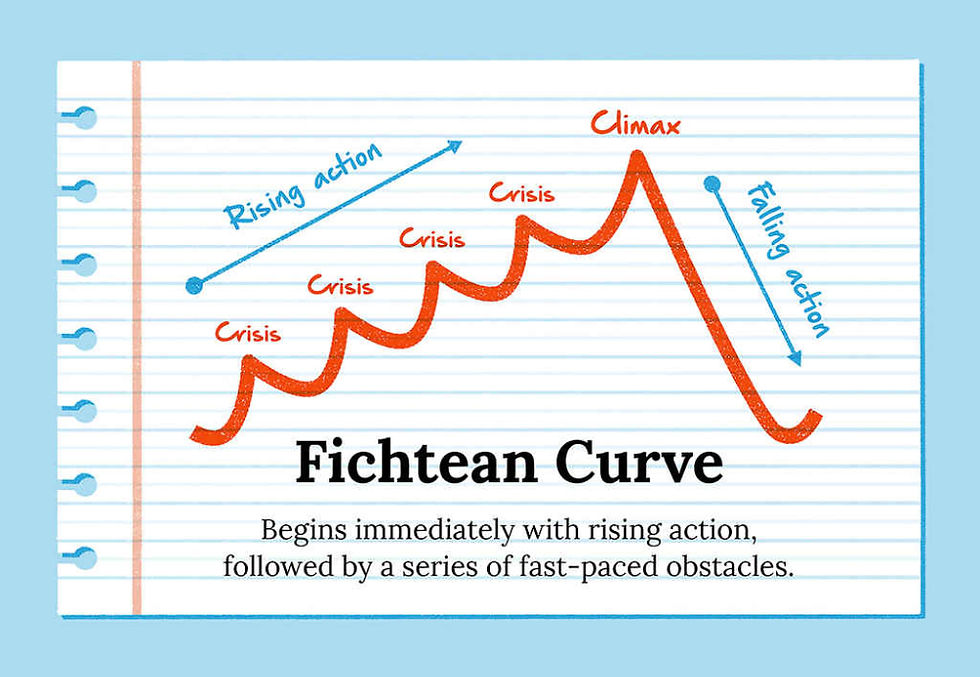
The Fichtean Curve is even more simple than Freytag's Pyramid, even though it tends to have more "plot points." In this structure, you simply have a series of crises that lead to a climax, and then a quick resolution. (Think A Confederacy of Dunces or The Wizard of Oz.) Since this plot structure is all about stakes, it works best for fast-paced stories with a lot of escalation, whether thriller, comedy, or any other genre.
Dan Harmon's Story Circle
I've loved the Story Circle ever since I outlined a screenplay using this plot structure (you can find that outline in this collection, if you're curious). The Story Circle, originally developed by Dan Harmon, consists of eight distinct stages that guide the protagonist through a transformative journey. This plot structure is particularly well-suited to narratives that focus on character growth and development.

Click here to learn more about Dan Harmon's Story Circle from The Storytelling Edge.
The Hero's Journey
Joseph Campbell, a renowned scholar of mythology, developed what would later be called The Hero's Journey in his 1949 book The Hero with a Thousand Faces. In it, he describes the 17 stages of what he called the "monomyth." The Hero's Journey is great for a piece with a more classical or mythological feel.

Dan Wells' 7-Point Story Structure

The 7-Point Story Structure is what I'm using for my current work-in-progress, and I'm really loving it so far. It provides a nicely symmetrical framework for my story, and I love the balance of structure and wiggle room that it gives me. This structure has a particularly strong narrative drive, making it perfect for creating a compelling plot that still leaves lots of room for creative play.
Click here to learn more about Dan Wells' 7-Point Story Structure from Masterclass.
Pro Tip:
While there are tons of other plot structures out there, with varying levels of detail and rigidity, these five are a great place to start exploring what kind of structure most resonates with you and the story you're telling. Remember that it's totally okay to find a structure and write your story around it, or to start with your story and find a structure that fits! That's the beauty of creative writing: You can do whatever works best for you.
Feeling inspired? Comment below what type of plot structure you want to try next!

Comments